5785 Results for “credit fc 26 ps5 Visitez le site Buyfc26coins.com Site sûr pour acheter des FC 26 coins.yAWj”
-
Person
Seung Woo Kim
 Coordinator, East Asia Working Group Seung Woo studies the history of international finance and offshore markets in the post World War II period with a focus on the way in which the realm of finance had been contested politically and culturally. Also, his research includes the integration of less-developed-countries in Asia (including Singapore, North and South Korea) into global finance from the late 1960s to understand the origins of financialisation in the region.
 -
Article
Argentina’s Unseen Fragility
May 18, 2018
With growth fueled by an increase in debt, Argentina is facing an uncertain economic future, despite investors’ generally rosy view. The government of Mauricio Macri has options to address the country’s macroeconomic risks, but none of them will be free of tough choices.
-
Video
The Government as an Entrepreneur
Mar 7, 2018
Mariana Mazzucato argues that the idea that entrepreneurship is confined to the private sector is wrong.
-
News
Nobel laureate Elinor Ostrom Passes Away at 78
Jun 11, 2012
Today the world lost one of its leading economic lights, as Nobel laureate Elinor Ostrom passed away at the age of 78.
-
Site Pages
Photos and Videos
-
Video
America’s New Aristocracy
Oct 22, 2025
The richest Americans control $46 trillion in wealth—but many pay little or no federal tax.
-
Conference Session
Digital Transformation, Opportunity and Social Sustainability
Jun 6, 2021 | 10:30
The governance of technology is a new challenge. The Recovery Plans is encouraging the digital transformation of our economies. An acceleration of technological change is bound to deeply affect labor markets and income distribution. While labor-market adaptation is likely to stave off permanent high unemployment, it cannot be counted on to prevent a sharp rise in inequality.
-
Conference Session
Values: Building a Better World For All
Jun 4, 2021 | 10:30
Our world is full of fault lines—growing inequality in income and opportunity; systemic racism; health and economic crises from a global pandemic; mistrust of experts; the existential threat of climate change; deep threats to employment in a digital economy with robotics on the rise. These fundamental problems and others like them stem from a common crisis in values.
-
Video
How Lifting Intellectual Property Restrictions Could Help World Vaccinate 60% of Population by 2022
Apr 29, 2021
As new coronavirus cases surge across India, calls are growing louder for wealthy countries to loosen intellectual property restrictions
-
News
Brad Delong recommends William Janeway’s INET Video Series: Venture Capital in the 21st Century
Feb 12, 2021
William Janeway: Venture Capital in the 21st Century: ‘In this eight-part lecture series, Bill Janeway investigates the relationship between venture capital and technological innovation, and the interdependent roles of entrepreneurial firms, the mission-driven State and financial speculation in the overall innovation system… LINK: https://www.ineteconomics.org/perspectives/videos/venture-capital>
-
Video
The Future of the Safety Net
Aug 19, 2020
A lot has changed since our taxes and benefits were designed, and the consequences of delaying reform are rising.
-
Podcasts
Camilla Toulmin
May 22, 2020
Camilla Toulmin, former director and associate of the International Institute for Environment and Development, talks to Rob about the role of civil society and education in African development.
-
Video
A Market for Votes?
Nov 16, 2018
Michael Sandel and Joe Stiglitz discuss why selling votes is bad for democracy, and how individual self-interest doesn’t always serve the public good
-
Working Paper
Conference paperOn the Role of Theory and Evidence in Macroeconomics
Apr 2010
This paper, which is prepared for the Inagural Conference of the Institute for New Economic Thinking in King’s College, Cambridge, 8-11 April 2010, questions the preeminence of theory over empirics in economics and argues that empirical econometrics needs to be given a more important and independent role in economic analysis, not only to have some confidence in the soundness of our empirical inferences, but to uncover empirical regularities that can serve as a basis for new economic thinking.
-
Working Paper
Working paperThe Consumption Response to Liquidity-Enhancing Transfers: Evidence from Italian Earthquakes
Jun 2015
Exploiting three earthquakes in Italy as quasi-experiments, we analyse the response of homeowners’ consumption to transfers targeted to finance housing repair and reconstruction. To the extent that funds are made available up-front, these transfers are akin to loans, mainly affecting the liquidity of households’ wealth
-
Working Paper
Working Paper SeriesChange and Rationality in Macroeconomics and Finance Theory: A New Rational Expectations Hypothesis
Mar 2015
We call attention to the class of models that serve as the foundation for the rational expectations hypothesis (REH). Models in this class rule out completely any structural change that cannot be fully anticipated with a probabilistic or other quantitative rule. REH models are abstractions of rational decision-making, but only in a hypothetical world in which participants can fully anticipate when and how they might revise their understanding of the process driving outcomes.
-
Grant
Years granted: 2012, 2013, 2014State-Contingent Environmental Policy
This research project proposes linking emission fees to actual temperatures, thereby helping to break the policy stalemate and reach agreement on an effective policy.
-
Video
Crime vs. Class
Sep 6, 2023
Unveiling the U.S. Prison System
-
Video
Saving Retirement
Feb 19, 2020
Is America facing a retirement crisis?
-
Article
German Worries: Fear Fosters Crisis
Jul 20, 2016
Inflation, the euro crisis – for years there has been one worry hype after another. Yet fear frequently turns out to be wrong. We need a committee of wise men in charge of dealing with the real risks.
-
Article
The Institute and Income Distribution at GES 2015
Oct 15, 2015
The Institute recently sponsored several panels at the Kiel Global Economic Symposium. In particular, the panel on Income Distribution and Mobility struck us as likely to be of especially wide interest. We are grateful for the participation of all the scholars on them and are pleased to present summaries of their presentations here.
-
News
The Healthcare Policy Podcast with David Introcaso interviewed INET's Thomas Ferguson on the Big Beautiful Bill
Jul 14, 2025
The Healthcare Policy Podcast
-
Article
Japan's Money Base Will Be 45% of GDP: US and UK is 19%-21%
Apr 4, 2013
Japan is going to double its money supply, according to today’s front page of the Financial Times (5 April 2013), and a salient question might be what we should compare that to. It sounds like a lot, but is it?
-
Podcasts
Thomas Ferguson
Aug 5, 2020
INET’s Research Director Thomas Ferguson talks to Rob Johnson about the many ways in which money corrupts our politics, contributes to ever-greater inequality, and what can be done about it
-
Podcasts
Margaret Heffernan
Jul 29, 2020
Margaret Heffernan, a writer and former CEO, talks to Rob about her latest book, Uncharted: How to Map the Future Together, on the art of thinking about the future in the context of uncertainty
-
Podcasts
Sarah Chayes: How Corrupt Elites Extract Wealth From Ordinary Americans
Nov 17, 2020
National security expert Sarah Chayes discusses her new book, On Corruption in America: and What Is at Stake. Chayes explores how corruption in U.S. state and society furthers and deepens inequality.
-
Podcasts
Martin Wolf: On Rebuilding Trust in Uncertain Times, Pt 1
Oct 19, 2020
Financial Times economics commentator Martin Wolf discusses how the loss of faith and trust in government and in experts leads many to believe in anything, resulting in disunity and polarization
-
Podcasts
Michael Sandel: The Tyranny of Merit
Sep 14, 2020
Renowned Harvard University professor of philosophy Michael Sandel talks about his new book and how centrist Democrat insensitivity to inequality and the ideology of meritocracy have contributed to right-wing populism, polarization, and distrust in government.
-
Video
Global Inequality is a Threat to Democracy
Aug 29, 2018
Winnie Byanyima shows how we all suffer when corporations evade taxes
-
Working Paper
Conference paperLinking Individual and Community Economic Mobility: The Spatial Foundations of Persistent Inequality in the United States
Apr 2015
Considerable academic and public attention has been drawn to the pulling away of the very rich—the so-called “one percent” whose gains have far outpaced those of everyone else (Piketty 2014). But the debate has reached well beyond the very top, especially in the United States.Indeed, the hollowing out of the middle class, continuing stagnation of wages, and new evidence on the lack of upward mobility across generations all strike at the very heart of the American ideal.
-
Video
The China Miracle?
May 22, 2024
If we are to work toward a better future, we must look beyond the surface, and understand the multifaceted reality of China’s ascent in the global arena.
-
Article
$1.90 Per Day: What Does it Say?
Oct 6, 2015
The World Bank’s global poverty estimates suffer from deep-seated problems arising from a single source, the lack of a standard for identifying who is poor and who is not that is consistent and meaningful.
-
Article
Why Don't Economists Go to Hollywood Parties?
Feb 15, 2015
Do economists live in a world of their own?
-
News
The Big Bet in Europe
Jun 4, 2012
It’s crunch time in Europe.
-
Grant
Years granted: 2015Geno-Econometrics
This research project explores how genomic data can inform the understanding of social science questions. The genomic revolution means that social scientists are able to correlate a range of outcomes and behaviors with genes. This research studies what these correlations mean.
-
News
Appelbaum and Batt Cite Their INET-Funded Research in the Boston Globe
Feb 3, 2025
Boston Globe
-
News
Rob Johnson and other commissioners sign a public letter on the importance of coming together to fight climate change
Jun 8, 2021
“Overcoming the COVID-19 crisis and ensuring a rapid and equitable economic recovery are only two of the challenges we must meet in 2021. This year will also be a crucial one for achieving the goal of net-zero carbon dioxide emissions by mid-century.” — Project Syndicate
-
News
YSI member and INET intern, Atanas Pekanov is appointed acting Deputy Prime Minister for the EFM
May 12, 2021
“The new acting Deputy Prime Minister for EU funds is called Atanas Pekanov. The young expert, who recently turned 30, is an economist at the Austrian Institute for Economic Research (WIFO) in Vienna, Austria, and a lecturer at the Vienna University of Economics and Business (WU Wien). … Member of the Young Researchers Initiative of the Institute for New Economic Thinking.” — Darik
-
Collection
INET Economists Respond to Summers & Stansbury
Lance Taylor, Servaas Storm, Mario Seccareccia and Marc Lavoie comment on Lawrence Summers and Anna Stansbury’s article titled “Whither Central Banking?”
-
Podcasts
Jacqueline Edwards
May 27, 2020
Education innovator Jacqueline Edwards talks to Rob Johnson about how technology has the potential to bring people from less fortunate backgrounds onto an inspired path of learning that creates opportunity and portends a better future for humanity.
-
Podcasts
Ed Pavlic
May 18, 2020
Rob Johnson talks to poet and scholar Ed Pavlic about how the pandemic’s physical distancing requirement forces us to reassess all of our relationships and how racism and inequality intensify the pandemic’s effects
-
Video
Making Sense of Globalization in the 21st Century
Jun 13, 2018
In a complex world, we’ll experience more “black swans”, and the things that standard economic models assumed away will matter much more.
-
Grant
Years granted: 2012, 2013, 2014, 2015The Unpublished Writings of J.M. Keynes
This research project commences work on a supplementary edition covering much of John Maynard Keynes’s significant writings on economics, philosophy, and politics that remain unpublished.
-
YSI Event
Institutional Responses to Financial Crises, 1870 to 2017 Webinar Series
YSI
DiscussionJan 23–Apr 3, 2017
The YSI Economic History Working Group and the YSI Financial Stability Working Group are hosting a webinar series on the “Institutional Responses to Financial Crises, 1870 to 2017”.
-
News
White’s INET working paper is cited in the Balance
Apr 28, 2021
“But ultra-low interest rates may be doing more harm than good, economist William White says in a working paper published last month by the Institute for New Economic Thinking. White, a former economic adviser at the Bank for International Settlements, has a number of arguments against this central bank policy. First, while lower borrowing costs do initially accomplish their goal of spurring spending, much of it is on “unproductive purchases” by both households and corporations that only wind up increasing the debt burden. Second, low interest rates can actually destabilize financial markets and the institutions surrounding them, either through inflated prices, encouraging fund managers to take on riskier investments, or hindering how banks and lenders are supposed to do business, White argues. And then there’s the exit problem. Once central banks lower interest rates, it’s very hard to tighten the flow of easy money. “Each cycle of monetary easing contributes to a buildup of undesired side effects that raises the likelihood of future instability,” White writes. “Central banks are then lured into a ‘debt trap’ where they refrain from tightening, to avoid triggering the crisis that they wish to avoid, but that restraint only makes the underlying problems worse.” — Diccon Hyatt, The Balance
-
News
Institute Grantee James K. Galbraith Wins 2014 Leontief Prize
Nov 10, 2013
Institute for New Economic Thinking grantee James K. Galbraith will be awarded the 2014 Leontief Prize.
-
Webinars and Events
Europe’s Hamiltonian Moment...or the Beginning of the End?
Webinar11:30am EDT / 5:30pm CET
May 20, 2020
A webinar panel discussion, moderated by Gillian Tett, US Managing Editor of the Financial Times, with Laurence Boone, OECD Chief Economist, Moritz Schularick, INET Research Fellow, and Adam Tooze, Director of the European Institute at Columbia University.
-
News
Melissa Hathaway’s INET article is featured in Inside Cybersecurity
May 19, 2021
“[T]he U.S. Department of Justice should determine and make clear that paying a ransom is illegal,” Hathaway said in an article posted May 13 by the Institute for New Economic Thinking. “This step would likely force organizations to further invest in their security and ability to withstand and recover from an incident (i.e., increase their resilience). Categorizing ransom payment as an illegal activity would also clearly remove coverage for these types of payments from insurance policies,” Hathaway wrote.” — Charlie Mitchell, Inside Cybersecurity
-
Podcasts
Alex Gibney
Jun 29, 2020
Alex Gibney, documentarian and director of Enron: The Smartest Guys in the Room, talks to Rob Johnson about the crimes perpetuated by American government and society today, including systemic racism, police brutality, and neglect of the COVID-19 pandemic.
-
Podcasts
Tolu Olubunmi
Apr 30, 2020
Rob talks to social entrepreneur and activist Tolu Olubunmi about the lack of faith in government in Africa—and in the rest of the world—particularly in response to the pandemic. They also discuss global migration, climate change, and how to maintain hope in dark times.
-
News
George Soros's Speech at Opening Session - INET Berlin
Apr 12, 2012
Soros’s remarks about the 2008 crash
-
Article
@INET Berlin: Decisions
Apr 12, 2012
A suprisingly large number of talks refer to the issue of human decision making.
-
Video
Sanctions: To Russia with Love
Feb 28, 2024
James Galbraith flips the script on sanctions. How has Russia adapted?
-
Webinars and Events
India: Aspirations & Contradictions in the Age of Nationalist Capital
Webinarwith Sanjay Jain, Ravinder Kaur, Sunanda Nair-Bidkar and Ila Patnaik. Moderated by Nasser Munjee and chaired by Nilanjan Sarkar
Jun 17, 2021
New economic engagements with India.
-
Podcasts
Jeffrey Sachs
Sep 24, 2020
Jeffrey Sachs, Director of Columbia University’s Center for Sustainable Development and Chair of the Lancet’s COVID-19 commission, talks about the many challenges and shortcomings of US policy towards the pandemic, as well as his new book, The Ages of Globalization, and how we can get the ethical foundations of economic thinking back on track.
-
Podcasts
Dani Rodrik
May 11, 2020
Harvard Kennedy School economist Dani Rodrik talks to Rob about the importance of putting debt payments by developing countries on hold in the face of the pandemic. They also discuss the state of globalization and the US-China relationship.
-
Podcasts
Lynn Parramore & Jeffrey Spear
Jun 11, 2020
INET Senior Research Analyst Lynn Parramore and NYU Professor of English Jeffrey Spear talk to Rob Johnson about what Victorian art critic John Ruskin’s writings on the collective have to do with the protests that have come in the wake of the killing of George Floyd by Minneapolis police.
-
Video
Empowering Women in Economics
Sep 20, 2023
Professor Rebeca Gomez Betancourt explores the transformative roles of pioneering women like Charlotte Perkins Gilman and Hazel Kyrk in the field of economics.
-
Video
Closing the Racial Wealth Gap
Sep 18, 2024
Bringing together 150 years of data, Ellora Derenoncourt is shedding new light on our understanding of the historical roots and persistent challenges of the U.S. racial wealth gap. This new picture highlights the scale of policies needed to achieve economic equality.
-
News
The Financial Times Cited Lazonick’s INET-Funded Research Into Big Pharma’s Financialized Business Model
Feb 7, 2025
The Financial Times
-
Webinars and Events
Liberté, Égalité, Fragilité
PlenaryApr 8–11, 2015
The Institute for New Economic Thinking held its sixth Annual Conference from April 8 to April 11, 2015, in collaboration with the Organization for Economic Cooperation and Development (OECD) in Paris.
-
Article
The Impact of Campaign Finance on Congressional Voting: A Machine Learning Approach
Mar 3, 2022
Legislators who vote together get paid together
-
Video
The Challenges of Europe's Monetary Union
Mar 9, 2014
Pisani-Ferry discusses the challenges facing the creation of a common monetary union in the form that was eventually agreed in the 1990s absent a political union.
-
News
How to Avoid a Third Depression: Richard Koo Testifies Before House Committee
Aug 3, 2010
On July 22nd, Richard Koo, the chief economist from Nomura Research Institute, testified before Congress’ Committee on Financial Services. The subject: what the U.S. can do to avoid sinking into a depression.
-
News
William Lazonick is quoted in on the stock market practices of Big Pharma
Oct 29, 2020
“Executives have an interest in getting the stock price up and price gouging customers is one way they can do this,” said William Lazonick, professor emeritus of economics at University of Massachusetts and co-founder of the Academic-Industry Research Network. While many drug companies argue that they use their vast profits to fund ongoing pharmaceutical innovation, Lazonick said, “we’ve shown that most of these companies don’t do that.” Instead, the soaring prices fuel soaring stock prices and executive pay, which is often based largely on that price.” — INET Grantee William Lazonick
-
Podcasts
Adair Turner
Apr 27, 2020
Rob talks to Adair Turner—member of the House of Lords, former Chairman of the British Financial Services Authority, and member of INET’s Commission on Global Economic Transformation—about how the COVID-19 economic crash compares to the post-2008 recession: namely, how to deal with a crisis of supply in addition to aggregate demand.
-
Video
Measuring Systemic Risk To Empower the Taxpayer
Aug 22, 2011
Banks take on excessive risk since they know, in case of failure, the taxpayer will step in to rescue them. That is a form of free insurance, and Ed Kane wants to end it.
-
Video
Why We Need To Rethink Economics
Jun 25, 2013
In this short interview, Institute co-founder George Soros tackles the question at the heart of the Institute’s mission: What’s wrong with economics and what can we do to change it?
-
Podcasts
Rise Up and Stop the Doomsday Machine!
Dec 17, 2020
In the final part of his conversation with Rob Johnson, Daniel Ellsberg talks about his hopes for this generation and why he wrote The Doomsday Machine. Part 3 of 3
-
Article
Jayadev: TPP is Dead, but its Legacy Lives On
Feb 10, 2017
Institute scholar Arjun Jayadev argues that while TPP is dead, its damaging legacy on intellectual property rights is likely to shape future bilateral trade agreements
-
Article
Guardian’s Wisconsin investigation points to big money’s systemic distortion of U.S. democracy
Sep 15, 2016
Newspaper’s probe amplifies questions raised by our research into the impact of corporate donations onU.S. elections
-
News
A challenge to dollar domination?
May 26, 2012
FT Alphaville uses a Lord of the Rings metaphor to describe the state of global currencies.
-
Webinars and Events
Global Commission on Economics Transformation at the CEPS Ideas Lab
ConferenceThe pandemic and the economic crisis: A global agenda for urgent action
May 31, 2021
By Stefano Sannino Secretary-General, European External Action Service (EEAS), Jutta Urpilainen EU Commissioner for International Partnerships, European Commission, Rohinton P. Medhora President, The Centre for International Governance Innovation (CIGI), Andrew Michael Spence Nobel Laureate of Economics, Co-Chair, Commission on Global Economic Transformation, Jayati Ghosh Professor of Economics, University of Massachusetts, Amherst, Andrea Renda (moderator) Senior Research Fellow, Head of GRID Unit, CEPS
-
News
Thomas Ferguson's research is cited in Noam Chomsky's interview with Jacobin
Jun 11, 2021
“Well, one place to look always is: “Where’s the money? Who funds Congress?” Actually, there’s a very fine, careful study of this by the leading scholar who deals with funding issues and politics, Thomas Ferguson. He and his colleagues did a study in which they investigated a simple question: “What’s the correlation over many years between campaign funding and electability to Congress?” The correlation is almost a straight line. That’s the kind of close correlation that you rarely get in the social sciences: greater the funding, higher the electability.” — Noam Chomsky in an interview with Jacobin
-
News
Schularick, Taylor, & Jorda’s INET funded research is cited in Bloomberg on the most stable investments
Mar 17, 2021
“The issue is important because it tends to conflict with a hugely influential study published in 2017, called The Rate of Return on Everything, by Oscar Jorda, Katharina Knoll, Dmitry Kuvshinov, Moritz Schularick, and Alan M. Taylor. This was a mightily ambitious piece of financial archaeology covering 17 countries, and it rendered the startling result that housing performed virtually as well as equities over time, but with much less volatility. The result held true for every country that Jorda and his colleagues examined.” — John Authers, Bloomberg
-
News
William Lazonick’s INET funded research was cited in Crenshaw’s speech at the SEC
Mar 10, 2021
“And what if there is a stock buyback during the period the share price is inflated? Does that harm shareholders because the company is spending money to repurchase its stock, or does it actually further benefit them by potentially raising earnings per share (EPS)?” … Citation: William Lazonick, The Financialization of the U.S. Corporation: What Has Been Lost and How It Can Be Regained, 36 Seattle U. L. Rev. 857, 859 (2013) (noting that trillions of dollars are spent on share buybacks and that “corporate executives who make these decisions are themselves prime beneficiaries of this focus on rising stock prices as a the measure of corporate performance”)
-
Podcasts
Andrew Sheng
May 4, 2020
After the Thirty Year’s War, Europeans turned to rationalism and ushered in the Scientific Revolution. Talking to Rob, Andrew Sheng, Director of the George Town Institute of Open and Advanced Studies in Penang, says that the pandemic could do the same, as experts and scientists recapture lost esteem. But it would be a different science, which focuses more on the interconnectedness of everything.
-
News
Comin's INET funded research into the drivers of technology adoption and its consequences is discussed in the Conversation
Jan 25, 2021
“The gap between the “technology haves and have nots” in the corporate world is widening. A recent study also found that this gap is widening between rich countries and poor countries. When few companies have access to 3D printers, robots, or cutting-edge AI, there are fewer actors to leverage such technologies to the point at which productivity will increase across the board.” — Wim Naudé, The Conversation
-
News
The Gainesville Sun featured Peter Temin's INET-funded book
Jan 5, 2021
“But to my surprise, The Atlantic article explained that MIT economist Peter Temin, in his book “The Vanishing Middle Class: Prejudice and Power in a Dual Economy,” not only delved into the contributing factors to poverty and economic inequality, he offered systemic solutions. This approach made the piece a must-read for me because at Gainesville for All, we’re all about finding systemic solutions to problems linked to race and poverty. Temin offered five proposals he believes can help tip the scales favorably for those stuck in the lower class.”— James F. Lawrence, Gainsville Sun
-
News
Hungary Is Facing Dangerous Amendments to Its Education Law
Apr 3, 2017
The Institute for New Economic Thinking, a global network of distinguished economists, is deeply concerned by the news of proposed legislation in Hungary’s National Assembly that would prevent the free functioning of the Central European University.
-
Video
Paul Samuelson and the Neoclassical Synthesis
Jul 24, 2011
Paul Samuelson was both a mathematical micro-economist, working from theorem to proof in the neoclassical tradition, and a committed Keynesian macroeconomist, convinced of the necessity of policy intervention to improve the performance of market economies. How did he square these two sides of himself? Wade Hands goes into the archives to find out.
-
Video
What Counts as Productive?
Jun 25, 2025
The most essential work in society isn’t accounted for in economic statistics.
-
Person
Suresh Naidu
 Professor in Economics and International and Public Affairs, Columbia University
 -
Person
Thomas Sugrue
 Professor of Social and Cultural Analysis and History, New York University
 -
News
Makronom cites Servass Storm’s INET working paper, Lost in Deflation
Feb 16, 2021
“That Italy is “lazy to reform” is probably one of the most widespread myths - and has little to do with reality. In 2015, for example, the OECD rated Italy’s reform efforts as significantly higher than those of Germany and France. The Dutch economist Servaas Storm takes the same line. In an in-depth study, he found that Italian politics as a whole adhered much more closely to the (market-liberal) economic policy guidelines of the EU than Germany and France.” — Phillip Heimberger & Nikolaus Kowall, Makronom
-
News
William Lazonick's research on stock buybacks is featured in Retail Dive
Nov 3, 2020
William Lazonick, president of the Academic-Industry Research Network and a professor emeritus of economics at the University of Massachusetts, who has devoted much of his research to the topic of buybacks, has written that the rule change “in effect gave corporations license to use open-market repurchases to manipulate the market.” … In an interview, Lazonick told Retail Dive, “These distributions to shareholders, particularly buybacks on top of dividends, are at the expense of keeping people employed, rewarding them for the work they’ve done, and investing in new products and processes.”
-
Podcasts
Rohinton Medhora
May 6, 2020
Rohinton Medhora—economist and President of the Centre for International Governance Innovation—talks to Rob about how our economic institutions, such as the global intellectual property regime and central bank independence hamper our ability to address the global crisis that the COVID-19 pandemic has unleashed. They also talk about the state of populism, US-China relations, and the effect of the pandemic on Africa.
-
Video
Teaching Economics the Adam Smith Way
Jun 6, 2018
The economist had to learn moral philosophy before anything else—an underpinning that’s still helpful for today’s students
-
Conference Session
Explaining a Decade of Stagnation: Where Do We Go From Here?
Dec 14, 2017 | 04:00—05:30
A discussion with Steven M. Fazzari, INET Grantee and the Bert A. & Jeanette L. Lynch Distinguished Professor of Economics, Washington University.
-
Working Paper
Working Paper SeriesThe Value-Extracting CEO: How Executive Stock-Based Pay Undermines Investment in Productive Capabilities
Dec 2016
The business corporation is the central economic institution in a modern economy. A company’s senior executives, with the advice and support of the board of directors, are responsible for the allocation of corporate resources to investments in productive capabilities. Senior executives also advise the board on the extent to which, given the need to invest in productive capabilities, the company can afford to make cash distributions to shareholders. Motivating corporate resource-allocation decisions are the modes of remuneration that incentivize and reward the top executives of these companies. A sound analysis of the operation and performance of a modern economy requires an understanding of not only how much these executives are paid but also the ways in which the prevailing system of executive pay influences their decisions to allocate corporate resources.
-
Video
The Economics of Uncertainty
Nov 6, 2013
Studies in psychology, neuroscience, biology, and many of the social sciences have long illustrated that human beings react very different from what economics textbooks tell you to expect when they are operating under conditions of radical uncertainty.
-
Grant
Years granted: 2011, 2012, 2013, 2014Hierarchy, Identity, and Collective Action
This research project explores the interaction between group identities and decisions to engage in collective action to secure access to public goods, such as education.
-
Partnership
Kiel Institute
Economic activity cannot be explained solely by modeling rational behavior. Our partnership with the Kiel Institute brings interdisciplinary scholars together to develop new perspectives on human motivation and decision-making.
-
Grant
Years granted: 2011, 2012, 2013A Spatial Approach to Macroeconomic Inference
This research project uses spatial cross-sectional variation in addition to time series variation to estimate fiscal multipliers; the impact of anti-predatory lending laws on housing prices, default rates, and foreclosures; and the impact of raising wages during recessions.
-
Article
History of Economics Journals in SSCI - a correction
Jun 13, 2012
In a recent post I wrote: “I am sure it will not take long before Journal of the History of Economic Thought (Cambridge Uni. Press) makes that list [Thompson Reuters, Social Science Citation Index].”
-
Video
Work, Retire, Repeat
Mar 6, 2024
The Uncertainty of Retirement in the New Economy
-
Person
Tanya Goldman

-
Person
Laurence van Lent
 Professor of Accounting and Economics, Frankfurt School of Finance and Management
 -
Person
David Weil

-
Person
Mervyn King
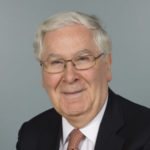 Professor of Economics and Law, Stern School of Business and Law School, NYU