Archive
-
News
How would Joe Stiglitz Would Fix the Economy
Nov 16, 2010
Can the Economy be Saved? The Los Angeles Times recently asked a number of economic experts about whether they thought the post-financial crisis economy can be saved, and if so, how.
-
Article
Market Volatility and QE2
Nov 15, 2010
The first thing to say about QE2 is that it is a very different operation from QE1.
-
News
The Deficit Debate
Oct 5, 2010
Will public deficit reduction encourage private sector growth, or undermine a needed stimulus to recovery & lead to Japan-style stagnation?
-
News
America Needs Stimulus, Not Virtue
Oct 4, 2010
What does America need?
-
Webinars and Events
Toward an Alternative Macroeconomic Theory
ConferenceBudapest 2010
Sep 6–8, 2010
The Institute joined DIME and Central European University in hosting a conference addressing a key question of economics today: How can we create a new macroeconomic theory that takes into account the true relationship of finance to the real economy and can more accurately anticipate crises?
-
News
Moving Beyond Washington’s Stale Economic Debate
Aug 30, 2010
In a recent column in the Huffington Post, INET advisory board member Jeffrey Sachs made the case that the economic debate in Washington has become “stale” and politicized - and needs to be reframed. This is poignantly relevant to INET, as we begin to make headway on helping to create a new economic paradigm.
-
News
Front Page of the NYT: Scholars Test Web Alternative to Peer Review
Aug 23, 2010
The New York Times has now pushed to the front page of today’s paper an issue of real relevance to INET: how new web tools are beginning to upend traditional peer review in academia.
-
News
Joseph Stiglitz in the Financial Times on the Need for a New Economic Paradigm
Aug 18, 2010
Joseph Stiglitz, noted economist, Nobel Laureate and Institute advisor, had a letter published in the Financial Times yesterday. In it, he noted the need for new ways of thinking about economics, and how this can be achieved.
-
News
Reinhart and Rogoff Clarify Debt Findings
Aug 10, 2010
What is the relationship between debt and growth rates?
-
News
China Needs Slower, Better Growth
Aug 8, 2010
Is China growing too fast?
-
News
How to Avoid a Third Depression: Richard Koo Testifies Before House Committee
Aug 3, 2010
On July 22nd, Richard Koo, the chief economist from Nomura Research Institute, testified before Congress’ Committee on Financial Services. The subject: what the U.S. can do to avoid sinking into a depression.
-
Video
Reforming Economic Theory
Apr 22, 2010
Joseph Stiglitz at the Institute’s debut conference in Cambridge, UK (2010).
-
Article
When Wolves Cry “Wolf”: Systemic Financial Crises and the Myth of the Danaid Jar
Apr 10, 2010
Presented at the inaugural Conference at King’s College
-
Working Paper
Conference paperPolitical Economy of Controlling Systemic Risk: What Governments Can Do Vs. What Governments Are Willing to Do
Apr 2010
In directing panelists to distinguish between what governments “can” and “will” do, this session’s title frames economic policymaking as a balancing act. Principled efforts to define and pursue the public interest are contested and repeatedly knocked off course by conflictingpersonal, bureaucratic, and political concerns that impinge on government decisionmakers.
-
Working Paper
Conference paperWhen Wolves Cry “Wolf”: Systemic Financial Crises and the Myth of the Danaid Jar
Apr 2010
Financial crises are staggeringly costly. Only major wars rival them in the burdens they place on public finances.
-
Working Paper
Conference paperMarcello De Cecco: Political Economy: What Can Government Do? What Will Government Do?
Apr 2010
The crisis of the export led model in the EMU countries and its monetary and financial consequences on European integration.
-
Conference Session
Political Economy: What Can Government Do? What Will Government Do?
Apr 9, 2010 | 12:15—02:05
-
Conference Session
Economics, Conventional Wisdom and Public Policy
Apr 9, 2010 | 06:35—08:05
-
Working Paper
Conference paperInequality and Economic and Political Change: A Comparative Perspective
Apr 2010
This paper describes the broad evolution of inequality in the world economy over the past four decades, and provides a summary account of the relationship between inequality, economic development, political regimes and the functional distribution of income.
-
Working Paper
Conference paperHow Empirical Evidence Does or Does Not Influence Economic Thinking and Theory
Apr 2010
This paper asks, how empirical evidence does or does not influence economic thinking and theory. In particular, which role do calibration, statistical inference, and structural change play?
-
Working Paper
Conference paperEconomic Policy Challenges in the Post-Crisis Period
Apr 2010
The global financial crisis—and the Great Recession that followed—have inflicted tremendous economic and social damage across the world. Thankfully, we now appear to be on the path to recovery—though it remains sluggish and uneven, and in need of continued policy support in many advanced economies.
-
Working Paper
Conference paperMathematical Formalism and Political-Economic Content
Apr 2010
Human economic interactions spontaneously express themselves in the quantitative form of prices and transactions quantities. Thismakes it difficult to avoid quantitative reasoning in political-economic research altogether
-
Working Paper
Conference paperReally Reorienting Modern Economics
Apr 2010
Modern economics can benefit significantly both from a radical reorientation at the level of method, as well as from a greater input from appropriate branches of philosophy.
-
Conference Session
How Empirical Evidence Does or Does Not Influence Economic Thinking and Theory: Calibration, Statistical Inference, and Structural Change
Apr 9, 2010 | 04:05—06:10
-
Conference Session
Mathematical Models: Rigorously Testable, Qualitative Metaphors, or Simply an Entry Barrier
Apr 9, 2010 | 06:30—08:05
-
Conference Session
Dominique Strauss-Kahn: Economic Policy Challenges in the Post-Crisis Period
Apr 9, 2010 | 08:05—09:55
-
Conference Session
The Consequences of Inequality and Wealth Distribution
Apr 9, 2010 | 10:00—12:15
-
Working Paper
Conference paperOn the Role of Theory and Evidence in Macroeconomics
Apr 2010
This paper, which is prepared for the Inagural Conference of the Institute for New Economic Thinking in King’s College, Cambridge, 8-11 April 2010, questions the preeminence of theory over empirics in economics and argues that empirical econometrics needs to be given a more important and independent role in economic analysis, not only to have some confidence in the soundness of our empirical inferences, but to uncover empirical regularities that can serve as a basis for new economic thinking.
-
Working Paper
Conference paperWhat Kind of Theory to Guide Reform and Restructuring of the Financial and Non-Financial Sectors?
Apr 2010
The purpose of the paper is to argue for attention to be paid, not only to choice of theory, but also to choice of theoretical approach, in order to address issues posed by the crisis.
-
Working Paper
Conference paperRevitalizing Global Economic and Financial Cooperation: Observations on the Global Financial Architecture
Apr 2010
Since the outbreak of the Asian financial crisis more than a decade ago, world leaders have been searching for ways to make the global financial system more resilient, less crisis-prone, and better able to play its essential role in supporting broadly-shared growth.
-
Working Paper
Conference paperNew Theories to Underpin Financial Reform
Apr 2010
As Carmen Reinhart and Kenneth Rogoff remind us in the title of their book, This Time is Different: Eight Centuries of Financial Folly, financial crises are nothing new (Reinhart and Rogoff (2009)). However, they often come as a surprise to many people because in most countries they appear only periodically.
-
Working Paper
Conference paperToward A New Global Financial Architecture: Some Issues and Approaches
Apr 2010
The current debate on new Global Financial Architecture is, in a way, the continuation of the debate that was intensified consequent upon the Asian crisis.
-
Conference Session
Toward a New Global Financial Architecture
Apr 8, 2010 | 12:00—01:45
-
Conference Session
Networks and Systemic Risk
Apr 8, 2010 | 08:15—09:45
-
Working Paper
Conference paperLife after “Rational Expectations”? Imperfect Knowledge, Behavioral Insights and the Social Context
Apr 2010
Many people regard the recent financial crisis as a painful addition to an already massive body of evidence that demonstrates the inadequacy of today’s economic models of “rational” markets.
-
Working Paper
Conference paperEfficient Markets: Fictions and Reality
Apr 2010
Eugene Fama, one of the founders of the so-called “Efficient Markets Hypothesis” (EMH), articulated early on the basic narrative that underpins it: “competition… among the many [rational] intelligent participants [would result in an] efficient market at any point in time [in which] the actual price of a security will be a good estimate of its intrinsic value” (Fama, 1965, p. 56).
-
Working Paper
Conference paperAnatomy of Crisis: Economic Theory, Politics and Policy
Apr 2010
The current economic and financial crisis, and it is both, has already imposed great costs on the global economy. Nor is there any guarantee that we have seen the worst and that recovery is now assured.
-
Working Paper
Conference paperGeorge Soros: The Living History of the Last 30 years
Apr 2010
Economic theory has modeled itself on theoretical physics. It has sought to establish timelessly valid laws that govern economic behavior and can be used reversibly both to explain and to predict events.
-
Working Paper
Conference paperEfficient Market Theory and the Recent Financial Crisis
Apr 2010
The world economy in 2008-2009 has passed through the most severe economic downturn since World War II. This global recession was preceded by the collapse of some of the largest financial institutions in the world.
-
Conference Session
Anatomy of Crisis- The Living History of the Last 30 Years: Economic Theory, Politics and Policy
Apr 8, 2010 | 03:00—04:50
-
Conference Session
Has the Efficient Market Hypothesis Led to the Crisis? Collapsed with The Crisis?
Apr 8, 2010 | 05:15—07:25
-
Conference Session
What Kind of Theory to Guide Reform and Restructuring of the Financial and Non-Financial Sectors?
Apr 8, 2010 | 09:50—11:40
-
Webinars and Events
The Economic Crisis and the Crisis in Economics
PlenaryNew Economic Thinking 2010
Apr 8–11, 2010
The Institute for New Economic Thinking convened many of the world’s most distinguished economists, academics and thought leaders at its inaugural Conference at King’s College, University of Cambridge.
-
Working Paper
Conference paperInterpreting the Great Depression: Hayek versus Keynes
Apr 2010
This is not intended to be a purely historical paper. I am interested in the light the Keynesian and Hayekian interpretations of the Great Depression throw on the causes of the Great Recession of 2007-9 and in the policy relevance of the two positions to the management of today’s globalizing economy.
-
Conference Session
1930 and the Challenge of the Depression for Economic Thinking
Apr 7, 2010 | 03:00—05:00
-
Conference Session
Where are we now? Debts, Deficits and Global Financial Stability
Apr 7, 2010 | 10:00—11:30
-
Working Paper
Journal articleOn The Career of a Microeconomist
Jan 1983
An autobiographical paper by William J. Baumol, in which he recounts his academic life and career. The paper is a contribution to a series of recollections and reflections on the professional experiences of distinguished economists which the Banca Nazionale del Lavoro Quarterly Review (now PSL Quarterly Review) started in 1979.
-
Person
Tinashe Nyamunda
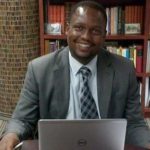 Associate Professor, University of Pretoria Nyamunda is an Associate Professor at the University of Pretoria. His research interests include African Studies, Monetary History, Post Colonial Informal Economies, and Displacement/Migration. View his Google Scholar profile here.
 -
Course
The Economics of Money & Banking
Learn to read, understand, and evaluate professional discourse about the current operation of money markets at the level of the Financial Times.
-
Course
Markets, Speculation and the State
William Janeway’s Far-Ranging Seminar on Fundamental Debates in Innovation and Finance
-
Course
The I Theory of Money
This lecture series is based on Brunnermeier and Sannikov’s research papers “The I Theory of Money” and “Redistributive Monetary Policy”
-
Course
Capitalism: Competition, Conflict and Crises
The aim of the two-semester sequence is to explore a coherent alternative to neoclassical and post-Keynesian theory that does not rely in any way on concepts of utility maximization, rational choice, rational expectations, or perfect/imperfect competition.
-
Course
Monetary Macroeconomics
Some years ago, in the aftermath of the “great financial crisis” (GFC) of the first decade of the twentieth century, Paul Krugman famously remarked that “most macroeconomics of the last thirty years was spectacularly useless at best and positively harmful at worst”. It is the premise of this set of lectures that it is possible to do better, much better.
-
Course
After the Crisis
Many thought the financial crash was a final blow to capitalsim. Why does it still reign supreme? Anatole Kaletsky outlines the shape of things to come.
-
Working Paper
What’s The Difference Between Growth And Prosperity? (Sample)
-
Person
Amanda Alexander
 Assistant Professor, University of Michigan
 -
Person
Anat Admati
 George G.C. Parker Professor of Finance and Economics, Stanford University Director, Corporations and Society Initiative Senior Fellow, Stanford Institute for Economic Policy Research
 -
Person
A.A. Erumban
 Assistant Professor & Researcher, University of Groningen
 -
Person
Alexander Arapoglou

-
Person
Andrew Acevedo
AA -
Person
Antonio Acconcia
AA -
Person
Alicia Barcena
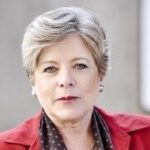 Executive Secretary, Economic Commission for Latin America and the Caribbean
 -
Person
Arie Arnon

-
Person
Anurag Behar

-
Person
Amy Blake
 Keane Federal Systems
 -
Person
Andrea Attar
 CNRS Researcher, Toulouse School of Economics Professor, University of Roma Tor Vergata
 -
Person
Andrew Bacevich
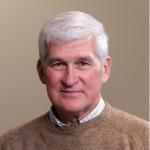
-
Person
Andrés Arauz
 Former Minister of Knowledge and Human Talent, Ecuador
 -
Person
Alina Bartscher
 University of Bonn
 -
Person
Agostino Capponi

-
Person
Alessandra Casarico

-
Person
Angus Burgin

-
Person
Anthony Blundell-Wignall
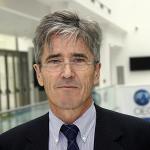 Director in the Directorate for Financial & Enterprise Affairs and Special Advisor to the Secretary-General on Financial Markets, OECD
 -
Person
David Abraham
 Professor Emeritus of Law, University of Miami
 -
Person
Alberto Botta

-
Person
Arturo Chang
 Assistant Professor , Department of Political Science at the University of Toronto
 -
Person
Anton Brender
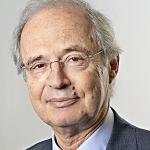
-
Person
Alejandro A. Canadas
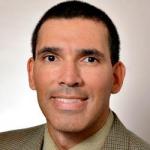
-
Person
Antonio Damasio

-
Person
Amitava Dutt
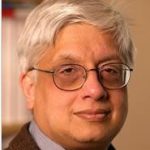 Professor of Economics and Political Science, Notre Dame University
 -
Person
Arindrajit Dube

-
Person
Abe de Jong

-
Person
Alexandria Eisenbarth

-
Person
Adrien Auclert
 Assistant Professor in Economics, Stanford University
 -
Person
Adam Tooze
 Kathryn and Shelby Cullom Davis Professor of History, Columbia University
 -
Person
Alessia De Stefani

-
Person
Ajay Chhibber
 Distinguished Visiting Scholar at the Institute of International Economic Policy, George Washington University
 -
Person
Ariel Ezrachi
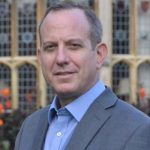 Slaughter and May Professor of Competition Law and Fellow, Pembroke College, University of Oxford Director, University of Oxford Centre for Competition Law and Policy
 -
Person
Armin Falk
 Professor of Economics, University of Bonn Director, Institute on Behavior and Inequality Director, Laboratory for Experimental Economics
 -
Person
Andrea Fumagalli
-
Person
Alicia Giron
 Researcher, Institute of Economic Research