The same technology that promises efficiency in offices is fueled by a system that is making life more costly for everyday workers. Part of “AI and the Future of the American Worker,” a series on how artificial intelligence is impacting labor, power, and the meaning of work.
You can’t open a news site without tripping over a grand declaration about how AI is remaking the economy. But often there’s a crucial part of the story missing: Who exactly is paying for the sprawling, power-guzzling machinery it needs to run on?
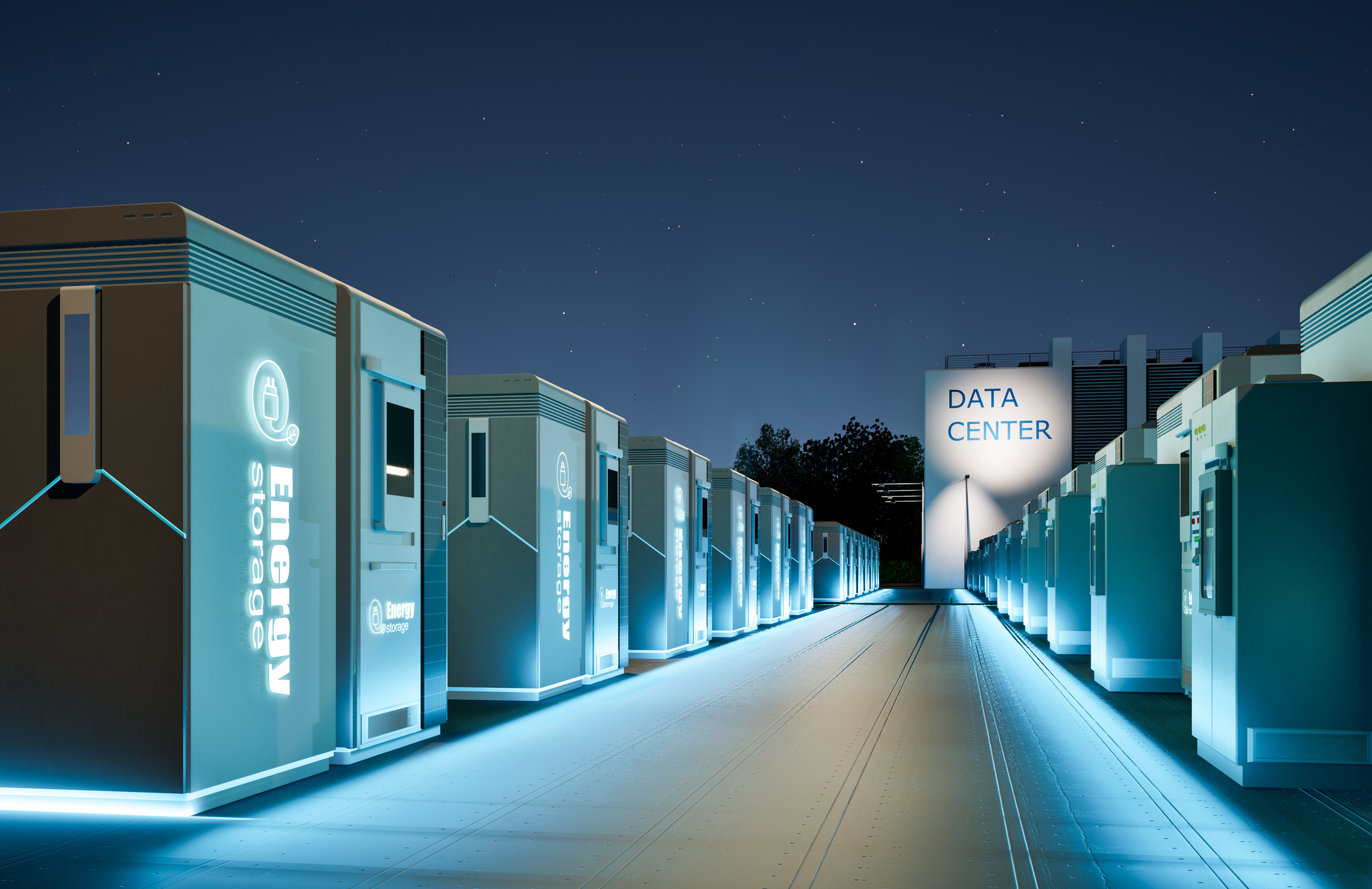
Behind the friendly chatbots and the nagging bossware lurk industrial-scale bunkers stuffed with computers running day and night to process requests, chew through data, and hammer away at AI training cycles so you can fire off questions to ChatGPT at 2am about how to stop procrastinating.
Just one hyperscale data center can cost around $11 billion to build – money that is usually fronted by the biggest players in the game like Meta Platforms, Microsoft, Google, and Amazon, or some private venture raising money on contracts from them. In Virginia alone there are already roughly 300 hyperscale data centers, racking up costs in land deals, energy demand, and grid expansion.
But here’s the rub: Silicon Valley may look like it’s paying the sticker price, but the cost never really stays put. First, you may notice your electricity bill mysteriously creeping up. Then the effects begin to fan out into daily life, like higher rent and more expensive borrowing. Pretty soon, everywhere you look, there’s a broader rise in prices that no one explained.
The price of living has gone up. Just as we were promised technological rainbows.
The Price of Power Hunger
The scale of data centers required by AI is difficult to fathom. As physicist Joseph Romm of the University of Pennsylvania’s Center for Science put it, “We’re not talking about facilities in the traditional sense – these are vast, power-hungry complexes, where a single hyperscaler begins to resemble the footprint of an entire country in terms of electricity consumption.”
When energy use scales this high, it spills over into the broader economy.
Big data centers often cut sweetheart deals with utilities that give them cheap power in exchange for promising to ease off the throttle when the grid gets tight. On paper, it sounds like reasonable, until you realize the grid still has to be built for their worst-case, full-blast consumption at all times. Which means extra plants, extra lines, extra everything—and then spreading the cost across your monthly bill in the background.
Case in point: a major report on the PJM power grid (which covers much of the eastern U.S.) found that regular utility customers across seven states ended up covering about $4.3–$4.4 billion in transmission upgrades. A big chunk of that was driven by data centers, but instead of charging the tech companies directly, the costs got bundled into everyone’s electric rates.
Virginians know what this looks like. A Bloomberg analysis found that in 2024, data centers already accounted for nearly 40% of the state’s electricity use, driven largely by the dense thicket of mega-facilities in Northern Virginia. A state-commissioned review revealed that rapid data center growth may cause a typical household bill to creep up about $14 to $37 a month in the coming years. They build; you pay.
Virginia is still the leader in data centers, but Texas is catching up quickly, with Georgia, Arizona, and Ohio also barreling forward as major hotspots for new AI builds. People in these communities are noticing something rather alarming: electricity prices rising at double the inflation rate.
Small business owners end up paying more to do the same work, even though the demand driving those costs is coming from data centers they may never see. They’re using the same amount of power, but the bills get higher.
Farmers face a squeeze as pollution and water use degrade soil and strain groundwater, steadily raising input costs, making irrigation more expensive, and shifting more of the environmental burden directly onto their operations.
Basically, no one escapes. In a recent study, economist Servaas Storm warns that higher energy prices feed into inflation across the whole economy. Once inflation heats up, he explains, central banks step in and keep interest rates higher for longer to cool things down. Higher rates are where ordinary people feel it in mortgages, car loans, and credit cards, all of which get more expensive, tightening household budgets.
Higher demand for housing can push rents and home prices up near data centers. Money spent on grid upgrades and tax breaks tied to them means fewer resources for things people actually need, like schools, public transit, local infrastructure, or basic community services that make life more affordable and stable.
Even if you’ve never touched an AI model in your life, you’re going to pony up for it.
Trickle-up Economics
The money from AI development follows a familiar pattern, with large firms and their leaders capturing most of the gains.
You can be sure that energy executives and companies are finding that AI is a goldmine for the power sector, with windfall-style gains flowing to regulated utilities that earn billions in additional profits as they build out and get reimbursed for new rate-based infrastructure to meet surging electricity demand. With compensation of top management bubbling up right along with it.
Some industry groups and analysts are blaming local opposition — “NIMBYism” — for higher prices in the age of data centers. AI-fueled demand is exceeding supply, they claim, because projects face community resistance, leaving grid expansion lagging and costs climbing. Policy groups like Third Way argue that a “slow and cumbersome” approval system is the real problem for consumers. Some data center projects have been delayed or scrapped due to local resistance, which supporters cite as proof that blocking development worsens affordability.
Thomas Ferguson, Director of Research at the Institute for New Economic Thinking, is not impressed by this argument. “The NIMBY business is vastly over-hyped,” he told me. “It’s like the old Reagan-era ‘snail darter’ controversy, where a small endangered fish took most of the blame in public debates for blocking major infrastructure, even though the real issues were far more complex.”
He says these narratives miss the fact that infrastructure fights are usually about political money and competition, not popular local opposition, pointing to past cases in which railroads promoted environmental arguments to resist waterway upgrades that would have increased competition from barges.
“Affluent homeowners in places like Martha’s Vineyard or California sometimes fight projects to protect property values,” Ferguson acknowledges, “but those cases are rare.” In his view, the pressures keeping utility costs high are “largely come from utilities themselves, often with fossil fuel and renewable producers joining hands against outside competition.”
In short, energy outcomes are driven less by “the market” and more by organized business interests influencing policy and investment behind the scenes. And as Servaas Storm points out, the huge promises companies make about AI to justify all this building – that it will usher in a golden age of abundance or solve humanity’s problems, are extremely hard (if not impossible) to prove.
Nevertheless, tech giants have perfected the art of fast-tracked approvals for new data centers, with state and local officials usually playing along to chase the promise of “investment.” But the real ledger tells a different story. True, there are a few construction jobs and a brief local hiring buzz, but studies consistently find that the longer-term economic gains for surrounding communities are limited, with most benefits reaped by the companies themselves while localities absorb the infrastructure and utility costs.
Mark Glick, who teaches law and economics at University of Utah, told me that the situation is totally out of balance: “Companies should have to pay for all the additional resources they use—why should we subsidize them? If you’re causing peak load, you’ve got to pay the difference.”
Joseph Romm shared with me his concern about how data centers are being financed: “Some companies, including Meta, are putting data centers off-book by creating separate entities that own the infrastructure,” he warns. In other words, the buildings and equipment are owned by separate financial structures, not directly by the tech companies. That means the assets don’t show up as large, long-term debts on their balance sheets, which makes the investments easier to pursue. But it also means that if the economics of AI shift or demand slows, companies may be able to just step away from the problem without taking the full financial hit—“potentially tens of billions of dollars” in losses, Romm says.
He notes that where you get your energy from also plays a big role in how affordable it is. In regions where fossil fuels are still an energy source, data center demand can reinforce reliance on systems that are subject to price fluctuations. These dynamics can affect electricity pricing stability for households and small businesses. Romm observes that environmental concerns overlap with economic ones, since communities feel the local effects of energy production while costs change at the same time.
“Five years ago, major tech companies were pledging net zero and casting themselves as climate leaders,” he told me. “Now they’re building infrastructure that sharply increases electricity demand, much of it met by fossil fuels.” He added that while Microsoft, Google, Amazon, and Meta “may differ in sincerity and execution,” all are adding grid demand that makes their former promises look more like marketing than actual commitment.
The Politics of Power: Just Say No?
In the 2019 documentary iHuman, Ilya Sutskever, former Chief Scientist and co-founder of OpenAI, had this to say: “I think it’s pretty likely the entire surface of the Earth will be covered with solar panels and data centers.”
Given the scale of infrastructure envisioned by AI researchers, it’s essential to act now, not later.
Policy has to stay ahead of the build-out because decisions about energy, land, jobs, environmental impact, and the purpose of AI need to be grounded in what actually serves regular people, not just what’s technically or economically convenient for powerful corporations or C-suite executives.
Darren Bush of the University of Houston warned in an email to me that “there is a history of companies misleading local governments about the benefits of development, and data centers are no exception,” noting that we don’t want a situation in which “the costs of data centers are externalized to citizens.” He added that in addition to electric bills, environmental, and water usage costs, there are health costs, too.
It’s hard to stay healthy — or hold a job — when you can’t sleep from the whine of cooling centers and generators, as residents around Virginia’s “Data Center Alley” are finding out in real time.
For Darren Bush, the concerns around data centers are stark enough that the default stance should be caution. Cities, in his view, should sometimes simply “just say no” to these projects because they “get all of the costs and none of the upside.” If they do move forward, he argues they need to make sure developers are fully on the hook. “To the extent they wish to play with fire, they should assure that all the externalities of the data centers are appropriately taxed,” which would “make data center peddlers to think twice.”
He also emphasizes that this can’t just be handled at the city level. “State regulators should play a role, too,” Bush adds, noting that “utility rates for existing citizens should be held harmless against the spikes caused by data center usage.” Still, he’s blunt about how difficult all of this is in practice: “That’s all easier said than done, of course,” he admits. “Which is why I’m a big fan of just saying no.”
Different policy choices can lead things in very different directions. For example, requiring data centers to run on renewable energy can change both long-term prices and environmental outcomes. Smart investments in the grid can keep the lights on while helping prevent your bills from creeping up too fast. More transparency around incentive deals and infrastructure costs also helps everyone get a clearer picture of what’s actually going on. When communities have a real seat at the table, they can help decide which projects go forward and what kinds of local benefits come first.
Tools like community benefit agreements give communities a way to tie big infrastructure projects to local needs. These deals can include job training, infrastructure upgrades, or steps to help keep costs steady for residents. But they don’t all look the same, and they only really work when people stay involved and keep an eye on how they’re carried out.
As AI infrastructure keeps mushrooming, it’s becoming a bigger part of the affordability conversation. Rising electricity demand, public incentives, and infrastructure spending all change the economic realities households deal with. When you connect the dots, you can see how tech growth affects the price of living, and how policy choices decide who actually feels those impacts.
At the end of the day, it comes down to a pretty basic question about who the AI economy is really for. As Amartya Sen has argued, “The central question is not what the system produces, but what it does to people.”
We don’t want AI running on the shrinking bank accounts of hard-working Americans.