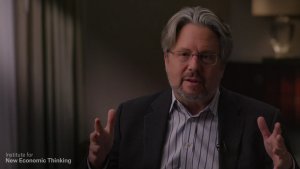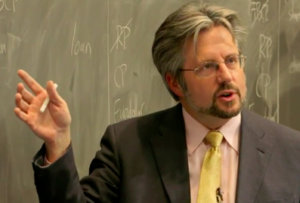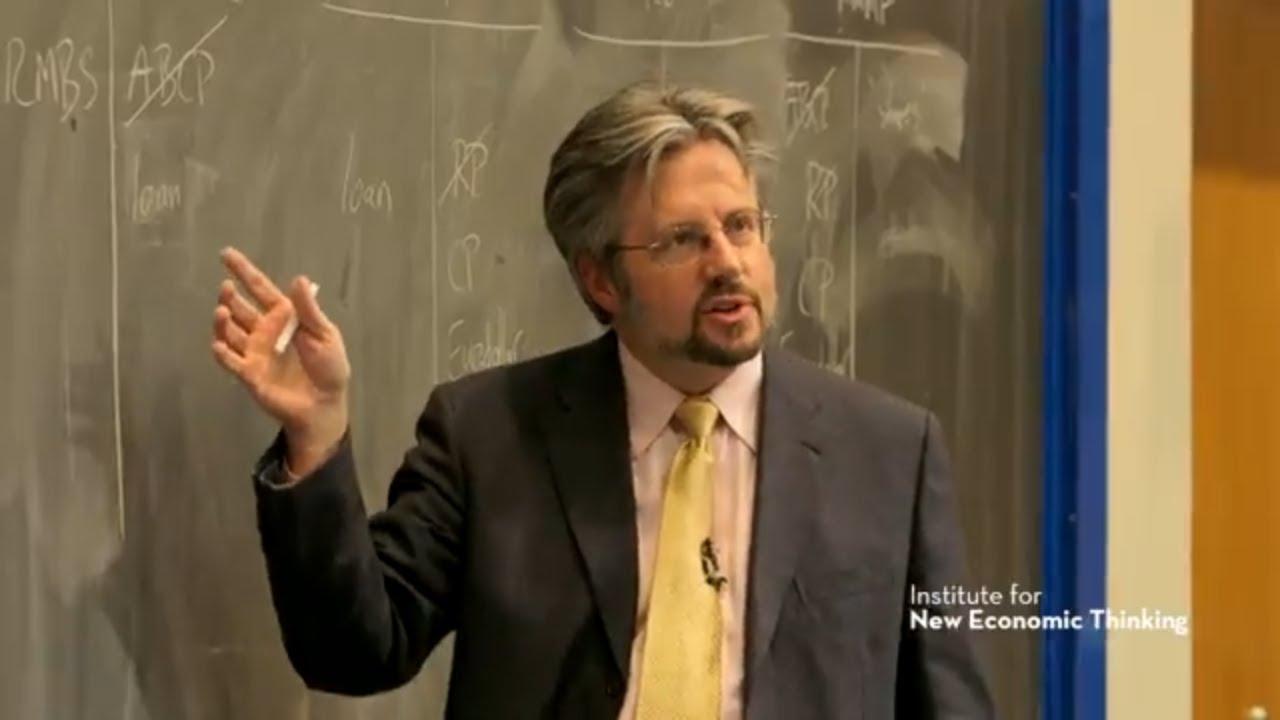
It is with deepest sadness and regret that we learned of the passing of Dr. Perry Mehrling. Dr. Mehrling played a vital role in INET and its Young Scholar Initiative (YSI) for many years. We were looking forward with hopeful anticipation to working with him far into the future. Alas, it was not to be.
Over the next few months, INET and YSI will be organizing a series of tribute to Dr. Mehrling. In the meantime, we gratefully reprint with permission the warm and generous appreciation of our long time colleague just published by our friends at the History of Economics Society. INET and YSI join with the EHS in expressing our deepest condolences to Dr. Mehrling’s wife and extended family.
The History of Economics Society joins his family and friends in grieving for Perry Mehrling, Professor of International Political Economy at Boston University and, previously, longtime Professor of Economics at Barnard College.
We have learned from a close colleague of his at the INET that Perry died Monday night from injury sustained in a fall several days earlier.
Perry was among the most highly esteemed scholars in our worldwide community of historians of economics for upwards of thirty years. His four sole-authored books, The Money Interest and the Public Interest: American Monetary Thought, 1920-1970 (Harvard, 1997); Fischer Black and the Revolutionary Idea of Finance (Wiley, 2005); The New Lombard Street: How the Fed Became the Dealer of Last Resort (Princeton, 2011); and Money and Empire: Charles P. Kindleberger and the Dollar System (Cambridge, 2022) are indispensable contributions to the histories of monetary economics, financial economics, and international political economy.
His works are also so eminently readable as to be useful in debates about money, finance, and financial power in the present day. What Perry wrote of Kindleberger is equally true of himself. He “was never content just to satisfy his own curiosity. He wanted to tell others so that they could use this new knowledge – indeed, he felt a positive duty to do so” (2022, p. 260).
The many people whose thinking and careers Perry touched will have their own recollections of him. We are eager to hear them. Ours in the HES include the numerous conference sessions in which he presented and participated; his collaboration with several of us on projects ranging from edited volumes to guest lectures and student events; his HES Best Article Prize for “The Monetary Economics of Benjamin Graham: A Bridge Between Goods and Money?” (JHET 33.3, Sept. 2011); and his appreciated efforts, which we promise to carry on, to host next year’s HES conference in Boston.
Nor can we forget his off-conference “Keynes’s Regret” dinners — the best reminder that, when we convene as scholars, we are (Champagne or no) among friends. We will miss our friend Perry.
Cristina Marcuzzo, HES President
Pedro Garcia Duarte, HES Vice President
Stephen Meardon, HES Secretary