5787 Results for “monedas fut 26 Visité Buyfc26coins.com. La rapidez del servicio me dejó impresionado..ELWX”
-
Working Paper
Working Paper SeriesComments on Paul Davidson’s “Full Employment, Open Economy Macroeconomics, and Keynes’ General Theory: Does the Swan Diagram Suffice?”
Feb 2016
This is a response to a critique by Paul Davidson of our 2013 book Keynes: Useful Economics for the World Economy and related work, where we describe, amongst other things, how the Swan diagram can be used to show how economies can use policy tools to achieve internal and external balance.
-
Video
Facts and Values Are Entangled: Deal with It
Jan 9, 2012
Are there more poor people on our planet today than there were last year? Many economists would approach this question as mainly a technical problem, a matter of counting.
-
Grant
Years granted: 2012, 2013, 2014, 2015Capital Controls and the International Monetary System
This research project develops a rigorous new theoretical way to study controls of international capital flows and determine their optimal magnitude using a promising new empirical methodology.
-
Grant
Years granted: 2011, 2012, 2013, 2014How Big Is Too Big? What Should Finance Do and How Much Should It Be Cut Down to Size?
This project studies a broad array of financial institutions to discover the impacts of financial regulations on functionally efficient finance, productivity growth, and income distribution.
-
Grant
Years granted: 2011, 2012, 2013Extending Macroeconomics and Developing a Dynamic Monetary Simulation Tool
This research project develops a software program for economic simulation that makes it easy to develop dynamic, monetary models of the macro-economy.
-
Grant
Years granted: 2011Developing a Market-Based Concept of System Risk
This research project develops an operational measure of systemic risk, as an input into the policy process by capturing the interaction of private and governmental sources of systemic risk during and in advance of the crisis.
-
Video
The Economics of Being Seen
May 28, 2025
What does economic inequality look like when we account for gender identity, sexual orientation, and lived experience?
-
Working Paper
Working Paper SeriesA Theory of How and Why Central-Bank Culture Supports Predatory Risk-Taking at Megabanks
Dec 2015
This paper applies Schein’s model of organizational culture to financial firms and their prudential regulators.
-
Working Paper
Working Paper SeriesLearning, Expectations, and the Financial Instability Hypothesis
Nov 2015
This paper analyzes what assumptions on formation of expectations are consistent with Minsky’s Financial Instability Hypothesis (FIH) and its corollaries.
-
Working Paper
Working paperNetworks and Misallocation: Insurance, Migration, and the Rural-Urban Wage Gap
Sep 2015
We provide an explanation for the large spatial wage disparities and low male migration in India based on the trade-off between consumption-smoothing, provided by caste-based rural insurance networks, and the income-gains from migration.
-
Video
Can You Trust the Experts?
Apr 10, 2024
Transparency and ethics are critical.
-
Person
Kaushik Basu
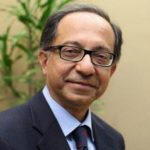 C. Marks Professor of International Studies and Professor of Economics, Cornell University Former Chief Economist, World Bank Kaushik Basu is Professor of Economics and the C. Marks Professor of International Studies at Cornell University and the former Senior Vice President and Chief Economist of the World Bank.
 -
Article
Baby Bonds: A Plan for Black/White Wealth Equality Conservatives Could Love?
Oct 25, 2016
Darrick Hamilton calls for spreading the benefits of asset-ownership to all Americans.
-
Article
The Promise of Regrexit
Jul 12, 2016
Europe’s leaders must recognize that the EU is on the verge of collapse. Instead of blaming one another, they should pull together and adopt exceptional measures.
-
Article
The Fed, Congress, and the President: The Constitutional Authority to Make Money
Apr 6, 2026
The struggle over the Federal Reserve is not just a dispute about central bank independence. It is a constitutional conflict over democratic sovereignty itself: in a representative system, the power to make money belongs first to the legislature, not the executive.