They came for your department stores, your newspapers, your hospitals. Now—hold onto your sesame seed bun—they’re coming for your burger. The drive for fatter profits means higher prices, lower quality, tougher conditions for workers, and sometimes the blowup of the business itself.
There are few things more American than a hamburger. It’s up there with apple pie.
Humble enough to eat with one hand, yet beloved by top chefs, this glorious food is the star of diners, drive-ins, roadside stands, and restaurants where everyone agrees that, whatever else they order, they came for the burger. Sliders, cheeseburgers, smashed, or vegetarian — the burger is familiar and mostly unpretentious, with a deliciously democratic quality.
Which makes it unsettling to discover that the burger has increasingly become a financial asset. While you were deciding between onion rings and fries, Wall Street execs were eyeing chains and restaurant groups, buzzing excitedly in C suites about leverage, margins, add-on acquisitions, and exit strategies.
You sense something’s off — a shrunken patty, a harried employee, a bathroom strewn with trash. A little less care in the things that used to make the place worth coming back to. Somehow the whole experience feels thinner – and so, by the way, does your burger.
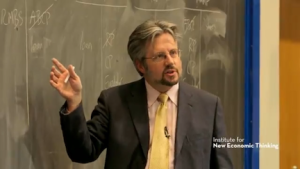
That’s because a private equity firm or a pack of activist shareholders hungry for profit is lurking in the background. Alas, the relentless financialization of America economists like William Lazonick have long been warning about is now impacting the quality of our dining experience, moving the burger business away from making good food, building lasting enterprises, and satisfying customers—and toward squeezing the last bit of juice out of the companies that sustain the American economy.
Why are besuited financiers ruining this beloved symbol of what’s left of America’s shared prosperity? The simple answer is that nobody’s stopping them. U.S. corporate and securities laws are allowing them to prey on businesses while shifting the costs onto everyone else.
Private equity firms are leading the charge in enshittifying your burger experience. Brendan Ballou, former DOJ special counsel for private equity, has described these opaque entities as “a perversion of capitalism created by our legal system,” and they’ve sunk their teeth into a sprawling collection of familiar restaurant names, from big national chains to regional spots you may think of as local. At the food website Ravenous, you can find a list of restaurants affected, including some of the biggest names in the burger pantheon, like Burger King, Sonic, Wendy’s, and Whataburger.
The results are anything but appetizing. On Reddit, there’s an entire subgenre of lamentations from Whataburger fans mourning changes to the Texas-born chain as it rapidly expands. Customers complain of floppy fries, slower service, and, one user noted ominously, “something …off with the beef.” Many are dating the decline to the chain’s 2019 sale to BDT Capital, the Chicago-based firm founded by Byron Trott, a former Goldman Sachs banker. BDT, which now also co-owns Krispy Kreme, snapped up a majority stake in Whataburger after the Dobson family had controlled the chain for roughly 69 years, prompting Reddit one user to comment, “It went to hell when it was sold.” Another offered an epitaph for what was once considered the “official burger of the Lone Star State”: “RIP …great while it lasted.”
Whatabummer.
Meanwhile, Wendy’s loyalists on Reddit call out “paper-thin” burgers, limp lettuce, cheaper-tasting ingredients, and stores so understaffed that the people behind the counter can barely keep up. A fan of Wendy’s celebrated Baconator burger describes its once-crisp, freshly cooked bacon as having the consistency of bubble gum. “Something is always cold or wrong or soggy or stale,” writes another. “Whoever makes food change decisions at Wendy’s has been pretty much wrong over the past 20 years,” observes one customer, citing a time frame that suspiciously tracks with Wall Street’s involvement.
Nelson Peltz’s Trian Fund Management (whose entry into General Electric ushered in a dark age for the iconic company) has held a major stake in Wendy’s for nearly two decades, with roughly 16 percent of voting power, and in 2026 reportedly explored taking the company private. Recently, Wendy’s CEO Bob Wright admitted that “cost and efficiency” decisions had hurt food quality as sales at existing U.S. restaurants fell. One Reddit customer has some simple advice for Mr. Wright on how to stop the destruction: “Just reverse everything they’ve done in the last 20 years…”
For my part, I recently visited a Shake Shack location in Midtown Manhattan, expecting the usual combination of crisp fries, a cold drink, and a well-executed burger. Instead, the ice machine was broken, the service molasses-like, the fries cold, and my burger arrived on a bun sprayed with sauce meant for somebody else’s order. My heart sank. Et tu, Shake Shack? This blasphemy is occurring as the Shack comes under pressure from activist shareholders, including Starboard Value, the firm run by billionaire investor Jeff Smith. Starboard has built a large stake in Shake Shack and is pushing the company to get more money flowing to shareholders.
One Shack manager described his experience pouring himself into the company he believed in, then watching it slash staffing until genuine hospitality became impossible. He eventually quit, concluding that Shake Shack had traded the workers and customers who built the brand for shareholder returns. As another former employee put it, “They fire and hire based on their stock price” and “make decisions on ingredients for the same reason.”
Pissed customers, disgruntled workers, financial pressure, and cost-cutting all point to the same queasy sense that something once reliably good is getting optimized beyond recognition.
Burgers are catnip for financial engineers. The ingredients are relatively cheap, the recipes are standardized, the customers are plentiful, and the restaurants can be cloned almost anywhere. A successful burger restaurant can be reduced to a formula of more locations, more franchises, more food units, and more revenue. You don’t have to invent anything particularly complicated — you just have to sell a lot of the same thing, move it faster and cheaper.
Financial firms do this by trimming menus, monetizing real estate, pressuring suppliers, selling franchises, and figuring out thousands of ways to nudge transactions upward by a few cents. The wonder of the burger, from Wall Street’s perspective, is that it’s the perfect machine for producing cash. Even the nostalgia and loyalty Americans feel towards the burger become an economic asset: a customer who keeps coming back keeps the whole game rolling.
And it isn’t just the burger biggies. That sandwich you ordered may look local from the booth, but the people calling the shots are anything but. Take Killer Burger, an independent regional chain known for its flamboyant Peanut Butter Pickle Bacon Burger. In 2020, the Portland-based company got a new financial partner when Village Family Capital, which calls itself a “growth equity capital” firm, took a bite, promising an “aggressive growth strategy.” Private equity is also chewing through the ranks of more local favorites, including Austin’s Hopdoddy, Southern California’s Burger Lounge, and Texas-based MOOYAH.
But what if fed up customers just stop showing up? Wall Street has a plan for that, too. By the time customers revolt, the firm may well have sold its stake, refinanced its investment, or moved on to gobble up next acquisition.
Once upon a time, people got rich from burgers by actually building a restaurant business. Consider Herbert N. Slotnick. After helping his father expand the family’s movie theaters and drive-ins across Central New York, Slotnick turned to fast food. In 1960, he secured the rights to operate Carrols hamburger restaurants in New York and began building a regional chain around Syracuse. By the mid-1970s, Carrols had more than 150 locations. In 1975, the company began converting its restaurants to Burger King, setting the stage for its rise into one of the country’s largest franchise operations.
Slotnick built the business the old-fashioned way by opening restaurants, hiring managers and workers, and figuring out how to run each location a little better. Former employees remembered him as a hands-on boss who respected his workforce. Over the decades, Carrols grew. By 2019, under Daniel Accordino, who had joined the company in 1972, it was Burger King’s largest U.S. franchisee, with more than 1,000 locations.
But by then, Slotnick’s approach to building a restaurant chain was falling out of favor. Why spend decades at it? Why not just use investment capital to snap up franchise operations, churn more profit out of them, combine them into bigger businesses, and turn that scale into fast financial returns?
Enter Matt Perelman and Alex Sloane, two Harvard Business School classmates in their twenties who wanted into the restaurant business despite having exactly zero operating experience. In 2013, while still at business school, they founded Garnett Station Partners, a private equity firm focused on buying and scaling franchise and other consumer businesses. After getting turned down by KFC restaurants due to lack of experience, they headed to North Carolina to study a struggling 23-unit Burger King operation run by veteran franchisee Ray Meeks. In 2014, they partnered with Meeks to acquire the business. The deal established Cambridge Franchise Holdings, the operating business they would use to build a much larger franchise platform. It gave Garnett Station, their PE firm, its first major foothold in the restaurant business.
Working with Meeks, Perelman and Sloane expanded Cambridge to 165 Burger Kings and 55 Popeyes across the South and Southeast. Then, in 2019, they sold the 220-restaurant business to Carrols Restaurant Group, the Burger King behemoth that Slotnick had helped build. Instead of taking cash, they took stock, emerging with an approximately 24 percent stake in Carrols – a powerful shareholder position — and joined the board. The deal exemplified the new Wall Street playbook: build a business quickly, scale it up, then trade it for a piece of something bigger. They basically used the restaurant business they’d assembled as currency.
The Wall Street journal quotes Marc Lasry, founder of private-equity shop Avenue Capital Group and a mentor to the pair, on Perelman and Sloane’s prowess: “They’ve established themselves as the next generation of moneymakers.” They’re into funeral homes now, too.
Meanwhile, as Wall Street has tightened its grip on Burger King, customers have complained about inconsistent food quality, slow service and shabby restaurants. In 2026, the King promised massive improvements, including to its classic Whopper, from a spiffed-up bun to “a creamier mayonnaise with citrus notes.” Here’s what didn’t improve: the beef. That costs real money.
To top it all off, Wall Street now has AI in its arsenal. The Washington Post reports that Wendy’s planned to test AI-driven menu changes and targeted selling, prompting a backlash over fears of Uber-style surge pricing. CEO Kirk Tanner insisted he’d been misunderstood after saying the company would try out “dynamic pricing” and AI-enabled upselling. Wendy’s says it isn’t planning surge pricing, but it hasn’t publicly explained just how its dynamic pricing would work, and, according to the Post, didn’t answer questions about it.
Economists have a name for this: “information asymmetry.” Customers may struggle to compare prices or know whether they’re getting the best deal. Which is just fine with the folks in the C suite.
There are a few bright spots in this admittedly distasteful story. Not every burger chain is willing to hand Wall Street the reins. In-N-Out Burger, the family-owned chain noted for its fresh ingredients and never-frozen beef patties, has resisted private equity and chosen deliberate expansion over selling control to investors. President Lynsi Snyder-Ellingson has said outright that outside private equity money offers nothing that aligns with what she wants for the business. Instead, In-N-Out has stuck to food quality, service and family ownership — a rare rebuke to Wall Street’s growth-at-all-costs playbook.
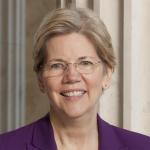
A few politicians are paying attention. Senator Elizabeth Warren recently went viral with a video titled “Why Food Chains Taste Worse and Cost More,” calling out private equity for the lousy state of some of America’s restaurant chains. Her diagnosis: “When they [private equity] cut costs, the quality of the product goes down.” The food fight also gives Warren a fresh hook for reviving the Stop Wall Street Looting Act, first introduced in 2019 and reintroduced in September 2026, which would make PE firms liable for acquired companies’ debts, close tax loopholes, and limit firms’ access to those companies’ public funds, including employees 401(k)s.
The underlying idea is that when Wall Street takes control of a company and collects the profits, it should also bear more of the risk and be accountable. Other useful approaches include Lina Khan’s antitrust strategy of cracking down on serial acquisitions that consolidate markets and weaken competition, and William Lazonick’s push to curb financial extraction through stock buybacks, executive pay tied to share prices, and incentives that reward payouts over long-term investment in workers and productive capacity.
Americans don’t have to give up burgers. But we do have to reclaim some power over who profits from them. Wall Street counts on everybody just shrugging and coming back anyway, but next time you get a craving, consider supporting independently owned restaurants and chains that prioritize food and workers over financial engineering. If you sense the quality of your burger spot taking a nosedive, check to see if private equity firms or activist shareholders have entered the picture. And by all means, push lawmakers to close the loopholes that let private equity load businesses with debt, extract cash and leave us with a burger that all bun and no beef.